Dry Utility vs. Wet Utility: Key Differences and Why It Matters for Your Project
Understanding the difference between dry and wet utilities is a critical step in the early stages of any construction project. Utilities are the lifelines of a development, supporting everything from communication and lighting to water supply and sewage systems. These utility services are essential for site development and require proper utility planning to avoid delays and cost overruns.
For developers, engineers, and construction managers, understanding how these systems differ—and how they interact—can help streamline planning, minimize permitting complications, and prevent costly redesigns. In this blog, we’ll break down the core differences between dry and wet utilities, explore the specific considerations of each system, and explain how Muller’s coordinated approach can keep your project running smoothly from the ground up.
What Are Dry Utilities?
Dry utilities refer to infrastructure systems that carry non-liquid services such as electricity, natural gas, telecommunications, fiber optics, and cable television. These essential services power buildings, enable connectivity, and support modern technological demands.
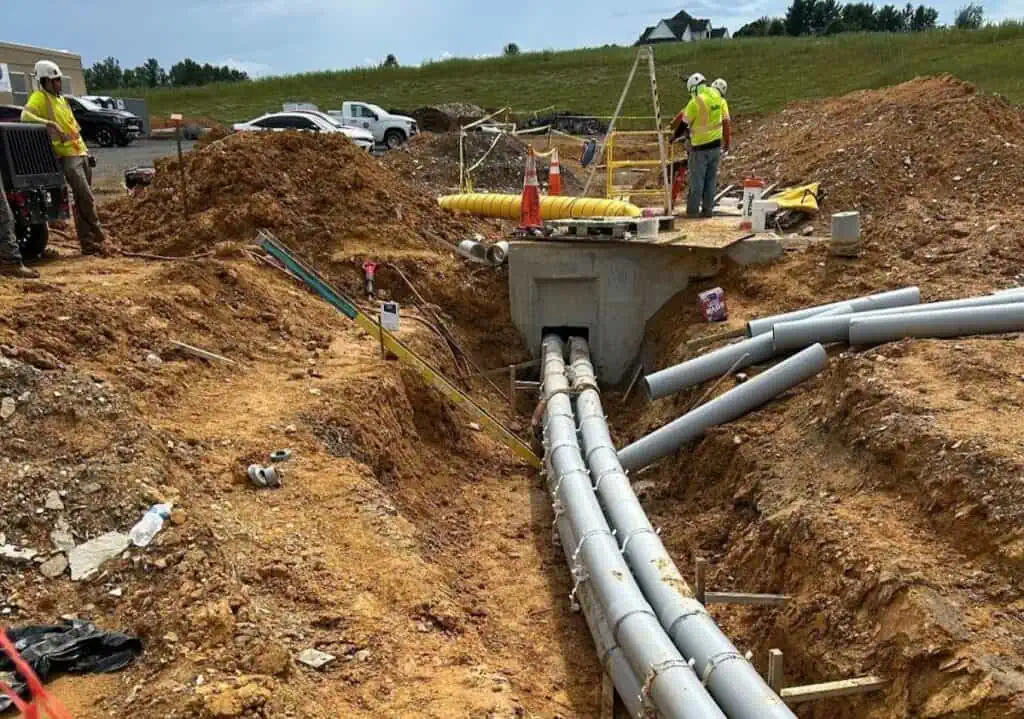
Dry utilities are typically installed in underground conduits, often in shared corridors with telecom lines, natural gas systems, and fiber infrastructure. The installation process requires careful planning to avoid future utility conflicts and must meet specific safety and spacing requirements.
When you work with Muller, we leverage our field-tested experience to plan and execute dry utility installations that meet evolving infrastructure demands, including fiber and telecom installations. Our dry utility planning process incorporates safety standards and real-time coordination with local utility providers to ensure smooth execution.
What Are Wet Utilities?
Wet utilities encompass systems that involve the transport of water or wastewater, such as potable water supply systems, sanitary sewer systems, and stormwater drainage systems. As the name suggests, wet utilities include systems that transport liquids essential to public health, sanitation, and stormwater management.
Because wet utility planning differs from dry utility planning, it often requires input from civil engineering professionals and compliance with stricter environmental and health regulations. The wet utility planning process considers factors such as flow rates, topography, and pipe sizing.
We work alongside municipal agencies to ensure wet utility planning is aligned with local requirements. Our experienced professionals understand the specific considerations for wet utilities and help minimize delays and cost overruns through early-stage coordination.
Key Differences Between Dry and Wet Utilities
While both types of utilities are essential to any development, they differ significantly in what they transport, how they’re installed, and who regulates them.
| Feature | Dry Utilities (Gas, Fiber, Electricity) |
Wet Utilities (Water, Sewer, Storm Drains) |
| Medium Transported | Power lines, gas piping, telecom/fiber | Water supplies, wastewater, storm drainage |
| Installation Requirements | Shallower trenches, conduit spacing, shielding | Deeper trenches, sloping, flow management |
| Permitting | Coordination with service providers | Requires environmental and municipal review |
| Construction Sequencing | Installed after wet utilities | Installed early due to depth and drainage |
We account for the differences between wet vs dry utility planning early in the design process. This reduces the risk of delays, ensures compliance, and supports your site’s development correctly.
Utility Design Challenges and Best Practices
Designing wet and dry utilities in constrained or urban sites presents significant challenges. Utility designers and coordinators must address overlapping corridors, limited trench space, and existing infrastructure.
Proper planning is essential for preventing utility clashes and enabling the successful installation of new systems. Muller’s team explores all potential risks early using clash detection software and modeling tools.
Muller also uses GIS-integrated modeling to support utility planning from experienced professionals. Our approach incorporates natural gas systems, electricity lines, and fiber to provide scalable, conflict-free solutions.
Why These Differences Matter for Your Project
Defining wet vs dry utilities isn’t just technical—it directly impacts your budget and schedule. The installation process, permitting paths, and coordination requirements vary substantially.
Expect wet utility planning to take longer due to regulatory oversight and depth requirements, while dry utility coordination often involves multiple utility providers, such as power companies and internet service providers. Without proper planning, these elements can create a risk of delays and cost overruns.
Our deep understanding of sequencing and utility planning is essential for site development success. Our phased strategy aligns each stage of design and installation with your project timeline.
How Muller Supports Utility Planning and Coordination
Muller brings years of experience in utility installation and civil construction to deliver precise and forward-thinking infrastructure plans. We offer dry utility planning services tailored to each project’s specific needs.
While we focus on design, our sister company, DFM Development Services LLC, provides dry utility design and coordination services. DFM collaborates directly with service providers to execute proper utility planning and avoid delays.
This partnership ensures that every utility plan is coordinated from concept to installation and activation, minimizing errors, improving safety, and maintaining momentum throughout the phases.
Frequently Asked Questions (FAQ)
What is the main difference between dry and wet utilities?
Dry utilities transport electricity, gas, and telecom, while wet utilities handle sanitary sewer systems, water supplies, and storm drains.
Why are wet utilities installed first?
Wet utility systems are buried deeper and rely on gravity flow. Installing them first avoids disruption of more shallow dry utilities.
Who is responsible for utility coordination?
Typically, a specialized coordinator manages dry utility coordination. At Muller, we collaborate closely with our sister company, DFM Development Services LLC, to work with utility providers and streamline timelines.
Can dry and wet utilities share the same trench?
No—due to safety and code regulations, wet and dry utilities require separate trenching or physically divided space within corridors.
Final Takeaways and Next Steps
Understanding the differences between wet and dry utilities is essential for successful site development. From the installation process to utility service coordination, each phase requires proper planning and professional insight.
What sets Muller apart is our transparent approach keeps all stakeholders aligned, ensuring utility infrastructure integrates seamlessly into the broader development. With decades of experience and forward-thinking solutions, we help clients reduce risk, control costs, and deliver successful outcomes.
Ready to streamline your utility infrastructure?
Contact Muller to start your project off right—or read more about our infrastructure solutions and discover how our team supports every stage of development.