
Site Clearing and Grubbing
Our Site Clearing and Grubbing Expertise
Clearing and grubbing is the first ground disturbance on most development projects, and shortcuts here often surface later as expensive problems. Stumps, roots, and buried organic material left below grade decompose over time, creating voids and soft spots that lead to settlement, failed compaction, and grading rework after construction is already underway.
Muller, Inc. performs site clearing and grubbing as the opening phase of a coordinated turnkey site development process, so your site moves from raw land to construction-ready without handoff delays. Our crews remove trees, vegetation, stumps, and debris across Virginia, Maryland, Washington, D.C., and the broader Mid-Atlantic region, leaving a clean, stable foundation for the work that follows.
Our Site Clearing and Grubbing Services
Clearing and grubbing scope varies with tree cover, site conditions, and what the project needs next. Muller handles the full range of work required to take a site from raw or overgrown land to a construction-ready pad:
- Tree and vegetation removal, including cutting, felling, and clearing of trees, brush, and undergrowth
- Stump removal and grubbing to extract root systems and buried organic material below grade
- Selective clearing that preserves protected trees, buffers, and conservation areas where required
- Debris hauling, chipping, and disposal in compliance with local requirements
- Topsoil stripping and stockpiling for reuse in final grading and landscaping
- Tree protection measures for preservation areas identified on approved site plans
- Initial rough grading to establish a stable base for the next phase of construction
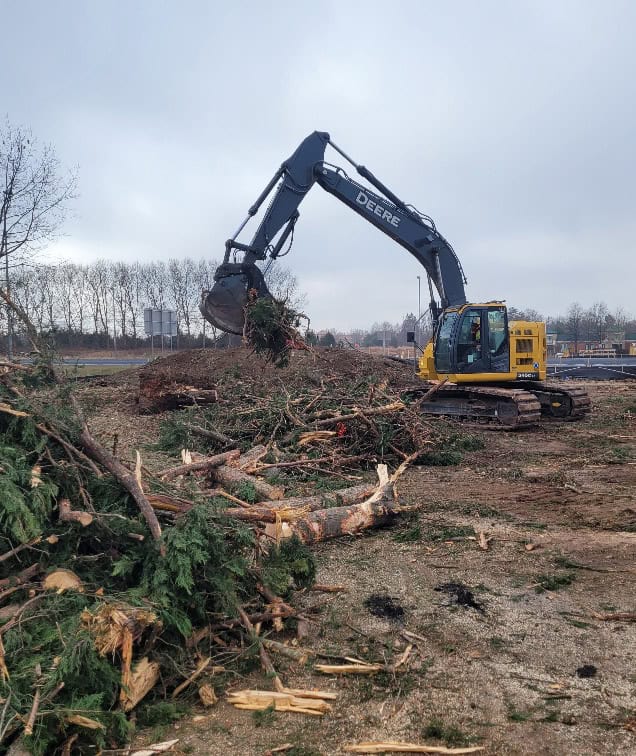
The Difference Between Clearing and Grubbing
- Clearing removes everything above the surface: trees, brush, vegetation, and surface debris.
- Grubbing removes what remains below the surface, including stumps, root systems, and buried organic material.
Both matter because organic material left in the ground does not stay put. As it decomposes, it creates voids that cause soil to settle unevenly, which can compromise foundations, pavement, and underground utilities. Thorough grubbing is what makes a cleared site genuinely ready for excavation and grading.
Clearing and Grubbing as Part of the Site Development Process
Clearing and grubbing rarely stands alone. It sits at the front of a sequence that determines how smoothly the rest of the project runs.
Before clearing begins, perimeter controls typically need to be installed and inspected. Because Muller self-performs erosion and sediment control, including super silt fence and construction entrances, we can sequence these scopes together instead of waiting on a separate contractor.
On sites with existing structures, site demolition and clearing are coordinated as a single effort. Where buried utilities are unknown, our hydro excavation and utility locating services identify what is in the ground before heavy equipment starts moving.
Once the site is cleared and grubbed, Muller carries the project forward into excavation and grading, utility installation, and stormwater infrastructure, keeping the full scope coordinated under one team.
Why Choose Muller for Site Clearing and Grubbing
Many clearing contractors finish when the trees are down. Muller, Inc. treats clearing and grubbing as one scope within a broader site development capability, which means tighter sequencing, fewer handoffs, and a site that is ready for the next phase on schedule.
Our crews work under strict safety protocols and follow the erosion control, tree preservation, and land disturbance requirements that apply in each jurisdiction. We coordinate inspections and permit requirements so project managers are not chasing paperwork while equipment sits idle.
With deep experience across Virginia, Maryland, Washington, D.C., and the Mid-Atlantic region, Muller understands local permitting environments and inspection expectations. From first ground disturbance through bond release, we provide the continuity that keeps complex projects moving.
Other Turnkey Site Development Services
Clearing and grubbing is the first phase in a larger site development sequence. Muller self-performs the work that follows, keeping your project under one point of accountability:
Clearing & Grubbing Service Areas
Virginia
Alexandria, VA
Annandale, VA
Arlington, VA
Centreville, VA
Dale City, VA
Fairfax, VA
Fredericksburg, VA
Herndon, VA
Manassas, VA
McLean, VA
Reston, VA
Maryland
Baltimore, MD
Bethesda, MD
Frederick, MD
Gaithersburg, MD
Germantown, MD
Silver Spring, MD
Washington, DC
Washington, DC
"*" indicates required fields
Site Clearing and Grubbing FAQs
Q: What is the difference between site clearing and grubbing?
Clearing removes everything above the surface, including trees, brush, and vegetation. Grubbing removes what is left below grade, including stumps, roots, and buried organic material. Both are needed to prevent future settlement and create a stable base for excavation and grading.
Q: Do I need a permit for land clearing in Virginia, Maryland, or Washington, D.C.?
In most jurisdictions, yes. Clearing typically falls under land disturbance permitting, and erosion and sediment control plans usually must be approved and in place before work begins. Requirements vary by county and project size, and Muller coordinates permitting as part of pre-construction planning.
Q: What happens to trees and debris removed during clearing?
Cleared material is typically chipped, ground, or hauled off site depending on project requirements and local disposal regulations. Usable topsoil can be stripped and stockpiled for reuse in final grading. Muller manages hauling and disposal so debris does not slow the project down.
Q: Why is grubbing necessary if the site already looks cleared?
Because the biggest risks are below the surface. Stumps, roots, and buried organic material decompose over time, creating voids that cause settlement under foundations, pavement, and utilities. Grubbing removes that material so the subgrade stays stable long after construction is complete.
Q: Can Muller clear large or heavily wooded sites?
Yes. Muller handles clearing and grubbing on projects ranging from small infill parcels to large, heavily wooded sites, including selective clearing where trees or buffer areas must be preserved. Crews and equipment scale to the site, and clearing is sequenced with erosion control and grading.
Q: What areas does Muller serve for site clearing and grubbing?
Muller provides site clearing and grubbing services throughout Virginia, Maryland, and Washington, D.C., including Alexandria, Arlington, Fairfax, Reston, Manassas, Fredericksburg, Bethesda, Gaithersburg, Silver Spring, and surrounding communities across the Mid-Atlantic region.