Mixed-use development continues to reshape urban landscapes by combining residential, commercial, and infrastructure elements into a single, integrated site. As cities grow and land becomes more constrained, developers are increasingly turning to these projects to maximize space, improve accessibility, and create long-term value.
However, with this opportunity comes complexity. Coordinating multiple building types, utility demands, and regulatory requirements can quickly create delays, cost overruns, and communication breakdowns.
This is where turnkey construction services play a critical role. By consolidating site development, utilities, and project execution under one partner, developers can streamline delivery, reduce risk, and maintain control over timelines and budgets.
Quick Facts / At a Glance
- Urban mixed-use development requires precise coordination of multiple asset types on constrained sites
- Turnkey services centralize site work, utilities, and environmental and permitting requirements under one accountable partner
- Early utility and infrastructure planning reduces rework, delays, and costly conflicts during construction
- Integrated wet and dry utility design supports long-term performance across residential, commercial, and operational demands
What Is Mixed-Use Development
Mixed-use development refers to a project that integrates multiple property types, such as residential, retail, office, and infrastructure, within a single site or development plan. These projects are designed to create efficient, walkable environments where people can live, work, and interact without relying heavily on external infrastructure.
Common examples include residential buildings with ground-floor retail, office and commercial complexes with integrated parking and utilities, and large-scale developments that combine housing, retail, and data-driven infrastructure. Cities and developers are prioritizing mixed-use development because it maximizes land use, improves community accessibility, and supports long-term economic growth.
What Are Turnkey Construction Services
Turnkey construction services deliver a start-to-finish approach to site development, with one partner managing planning, utilities, and execution. This reduces coordination risk, accelerates timelines, and keeps budgets aligned from day one. For mixed-use development projects, turnkey teams integrate all site development tasks such as grading, wet and dry utilities, stormwater systems, and final site work into a single workflow.
Learn more about our Turnkey Site Development to see how this approach streamlines complex urban projects.
The Role of Turnkey Site Development in Mixed Use Development
Mixed-use development projects require a high level of coordination across multiple systems, stakeholders, and construction phases. Turnkey services bring these moving pieces together under a single strategy, helping to streamline execution and reduce risk from the outset.
Single Point of Accountability
With multiple stakeholders involved in mixed-use development, miscommunication is a common source of delays. A turnkey approach eliminates this issue by providing one accountable partner responsible for the entire site development scope of work. This improves decision-making speed, reduces errors, and ensures alignment across all phases of the project.
Streamlined Site Development and Utilities
Turnkey teams integrate site preparation, utility installation, stormwater management, and regulatory requirements into a unified workflow. This coordination is especially important for mixed-use developments, where wet and dry utilities must support multiple building types and operational demands.
Improved Cost Control and Budgeting
Early planning and value engineering allow turnkey providers to identify efficiencies and reduce unnecessary costs. By aligning scope, schedule, and infrastructure from the start, developers gain more predictable budgets and fewer surprises during construction.
Faster Project Timelines
When all services are managed by a single provider, scheduling conflicts and delays are minimized. Turnkey development keeps projects moving efficiently by eliminating gaps between phases and ensuring continuous progress.
Key Challenges in Urban Development Projects
Urban development projects introduce layers of complexity that can quickly impact timelines, budgets, and coordination if not managed properly. Understanding these challenges is key to building a strategy that keeps mixed-use development projects moving efficiently from start to finish.
Complex Site Constraints
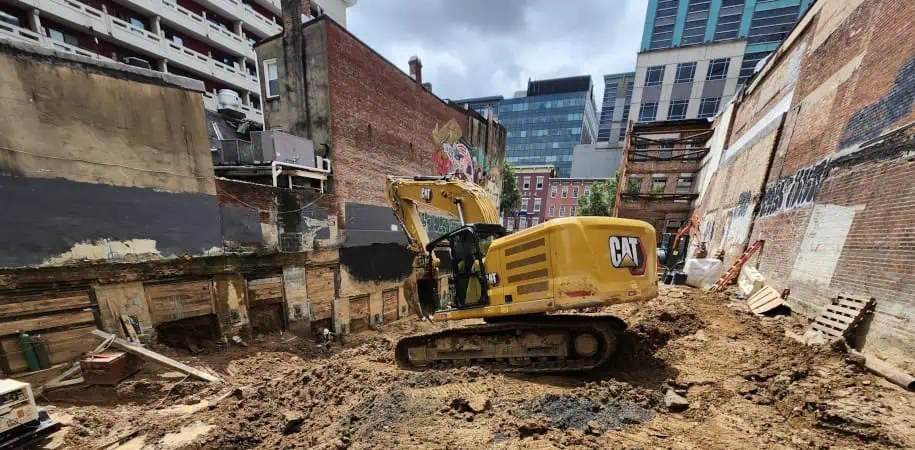
Urban sites often have limited space, existing infrastructure, and strict zoning requirements. These constraints require precise planning and execution to avoid conflicts and delays.
Utility Coordination and Capacity
Mixed-use development demands significant power, water, sewer, and telecom capacity. Coordinating these systems across multiple uses requires careful planning and integration.
Permitting and Regulatory Pressure
Urban development projects must navigate multiple agencies, approvals, and inspections. Delays in permitting can significantly impact timelines if not managed proactively.
Scheduling and Contractor Coordination
Managing multiple contractors across different phases introduces risk. Without proper coordination, projects can experience delays, rework, and cost increases.
Core Components of Turnkey Site Development for Urban Projects
While each project varies, most mixed-use developments follow a similar set of core site development components. A turnkey approach ensures these elements are planned and executed together, rather than in isolated phases.
- Site Preparation and Earthwork: Clearing, demolition, and grading establish a stable foundation and prepare the site for infrastructure installation.
- Utility Infrastructure: Water, sewer, stormwater, electrical, and telecom systems are installed in coordination to support multiple building types and long-term performance.
- Stormwater Management: Retention, detention, and underground systems manage runoff, prevent flooding, and support regulatory compliance.
- Final Site Work: Paving, concrete, and access improvements complete the site and prepare it for occupancy and approvals.
For a deeper breakdown of how these phases work together, explore our related content on turnkey site development and utility coordination.
Why Turnkey Matters for Urban and Mixed Use Projects
As urban environments become more dense and infrastructure demands increase, the need for efficient, coordinated development becomes critical. Turnkey services help ensure that projects are built with long-term performance in mind, supporting reliability, compliance, and scalability. This approach not only improves construction outcomes but also enhances the long-term value of the development.
Turnkey vs Traditional Development Approach
| Factor | Turnkey Approach | Traditional Approach |
| Coordination | Single partner | Multiple contractors |
| Timeline | Streamlined and efficient | Higher risk of delays |
| Cost Control | Predictable and optimized | Increased variability |
| Risk | Reduced through integration | Higher due to fragmentation |
| Communication | Centralized | Disconnected |
Why Choose Muller for Turnkey Development
Choosing the right partner is critical for complex mixed-use development. Muller delivers an integrated, turnkey approach that keeps projects aligned from planning through final approvals.
- End-to-end delivery: One team managing site development, utilities, and final site work
- Utility expertise: Coordinated wet and dry utility design and installation for multi-use demands
- Proven execution: Experience with complex, multi-phase urban projects
- Compliance-first approach: Built to meet regulatory requirements and support long-term performance
With a single point of accountability and a coordinated strategy, developers can reduce risk, maintain schedules, and deliver reliable infrastructure across every phase of the project.
Contact us today to discuss your next urban development project.
FAQs
Q: What is mixed-use development?
Mixed-use development combines residential, commercial, and infrastructure elements into a single, integrated project designed to maximize land use and efficiency.
Q: What are turnkey construction services?
Turnkey construction services provide a complete, start-to-finish solution where one partner manages all aspects of site development and infrastructure.
Q: Why are turnkey services important in urban development projects?
They improve coordination, reduce delays, and provide better cost control by consolidating all services under one provider.
Q: What utilities are required for mixed-use developments?
Mixed-use developments require both wet utilities, such as water and sewer, and dry utilities, such as power and telecommunications.