Dry utilities—such as electric, fiber, and gas lines—form the hidden foundation of every modern development. But in dense cities, installing them demands a level of precision and foresight that only experienced professionals can provide.
With a strong track record of utility installation services across Maryland, Northern Virginia, and Washington, D.C., Muller understands how to navigate congestion, aging infrastructure, and overlapping provider requirements. This blog examines the distinct challenges of dry utility installation in urban environments and the innovative solutions Muller provides for each project.
Understanding Dry Utilities and Their Role in Urban Development
Dry utilities refer to critical services, such as electrical lines, telecommunications, fiber optics, and natural gas—all of which are essential for powering and connecting urban spaces. These systems support everything from lighting and communication to data transmission and public safety infrastructure. Unlike wet utilities (such as water, sewer, and storm drains), dry utilities typically carry energy or data and require specialized handling.
As cities evolve, demand for high-speed internet and electric vehicle infrastructure is increasing, making these systems more vital than ever. In high-density areas, where underground utilities are limited and often occupied by legacy systems, strategic coordination becomes essential. Muller’s expertise in both wet and dry utilities makes them uniquely equipped to assess full site infrastructure requirements from day one, ensuring compatibility across all systems while aligning with jurisdictional standards.
Key Challenges in Urban Dry Utility Installation
Urban utility projects demand careful orchestration, especially when it comes to installing dry utilities beneath active roadways, in the public right of way, and in densely packed corridors. Before exploring solutions, it’s essential to understand the common obstacles that make urban utility installation uniquely complex.
Limited Right-of-Way and Trenching Restrictions
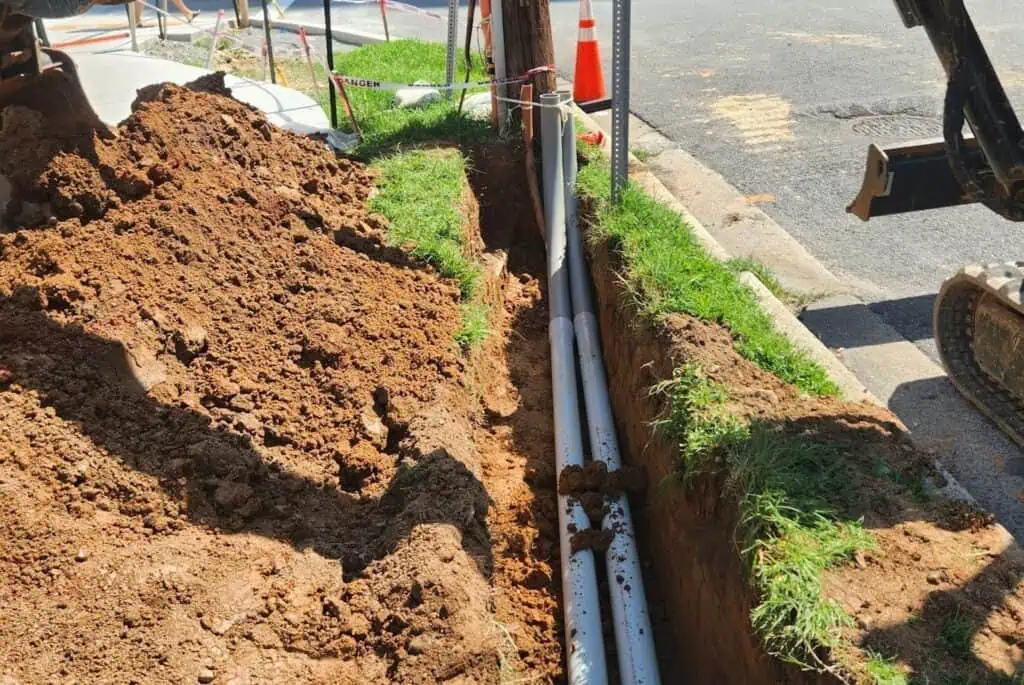
Urban development zones often have narrow corridors that must accommodate multiple utility lines. Excavating in these spaces—especially near historical sites, underground transit lines, or active roadways—demands detailed planning and extreme precision. Overlapping infrastructure requires an expert approach to avoid service interruptions and unnecessary demolition.
Muller addresses these complexities through phased installations, alternate trench alignments, and advanced modeling software that simulates routing in constrained environments. These efforts help maintain the integrity of existing utility lines while opening paths for new utility lines.
Utility Congestion and Mapping Accuracy
Legacy infrastructure, outdated records, and undocumented utilities create major risks during installation. Even minor errors in locating existing utility lines can result in costly rework or service disruptions.
Muller mitigates this with advanced Subsurface Utility Engineering (SUE), LiDAR scanning, and field-verified utility mapping. These proactive methods enable accurate detection and reduce the potential for a utility strike during excavation. Their in-house teams work closely with utility companies to verify records and adjust plans based on real-world conditions.
Scheduling and Permitting Delays
Coordinating with agencies, transportation departments, and dry utility providers can stall projects, particularly when multiple approvals are required across jurisdictions. Delays in permit acquisition can cascade into costly project slowdowns.
Our extensive regional experience gives them an edge in navigating the permitting landscape. Their relationships with local municipalities, utility providers, and permitting offices allow them to anticipate potential bottlenecks and take proactive steps to secure approvals early. This streamlining supports timely mobilization and uninterrupted utility services.
Public Safety and Traffic Management
Safety is always top priority. Whether it’s protecting pedestrian pathways or maintaining traffic flow, Muller adheres to strict safety standards and employs best practices like night work, phased closures, and barrier systems to minimize community impact.
They also conduct pre-installation risk assessments and develop traffic control plans in alignment with DOT requirements. Their field crews are trained in both OSHA and local safety regulations, ensuring safe environments for the public and on-site workers alike.
Solutions and Best Practices for Efficient Urban Installation
Now that we’ve outlined the primary challenges faced in dense urban environments, it’s time to explore the practical strategies that Muller uses to overcome them. These best practices help ensure efficient, safe, and code-compliant dry utility installations—even in the most complex cityscapes.
Forward Planning and Utility Coordination
Early-phase planning is essential to avoid costly delays and redesigns during utility installation. Our sister company, DFM Development Services, offers expert dry utility design and coordination services that streamline the process from the start.
Through stakeholder collaboration, milestone-based schedules, and detailed routing diagrams, DFM aligns project timelines and reduces the risk of utility conflicts. Their use of digital design tools and real-time adjustments ensures clear communication and efficient execution across every phase of development.
Trenchless Technologies and Minimal Disruption Techniques
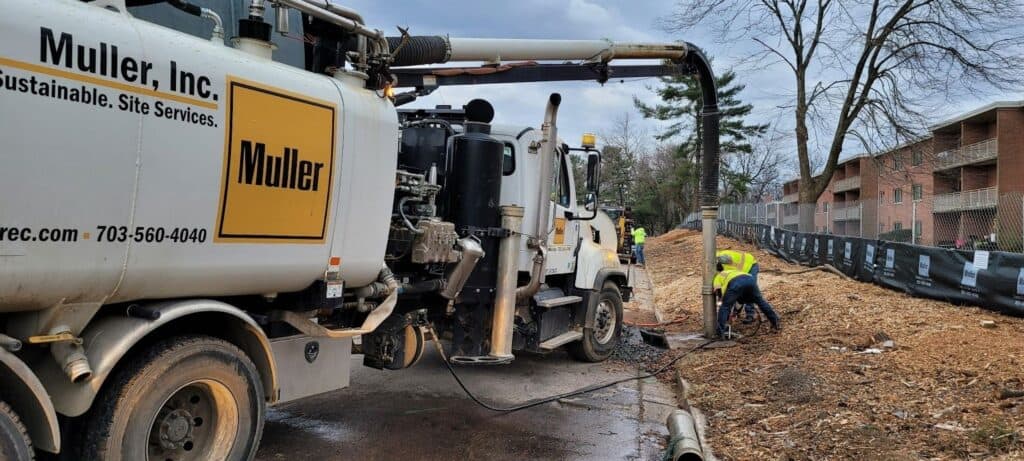
When traditional trenching isn’t feasible, Muller deploys methods like directional boring, hydro excavation, and vacuum trenching. These low-impact solutions allow installation with minimal surface disruption, especially beneficial in busy downtown corridors and sensitive areas.
Using trenchless techniques not only accelerates installation but also preserves roadways, reduces noise pollution, and minimizes risk to existing lines. Muller selects the appropriate method based on soil conditions, utility depth, and proximity to existing infrastructure, always prioritizing safety and longevity.
Value of Accurate Dry Utility Studies
Dry utility studies are essential for anticipating service needs, designing optimal routing, and avoiding conflicts with existing systems. Muller partners with DFM Development Services, a sister company that specializes in dry utility design, studies, coordination, and easement planning. These studies include detailed load assessments, regulatory research, and utility provider coordination.
By incorporating DFM’s findings early in the process, Muller is able to provide clients with highly informed design recommendations, accurate cost projections, and strategic phasing plans that align with broader development goals.
Learn more about DFM’s services here
Why Muller Is the Right Partner for Urban Dry Utility Projects
Muller’s work is rooted in safety, efficiency, and precision. With expertise across both wet and dry utilities, and a highly experienced team equipped with advanced technology, they consistently deliver infrastructure solutions that meet code, exceed expectations, and stand the test of time.
Their deep familiarity with local codes, permitting processes, and utility providers gives them a unique advantage in dense urban markets. From preconstruction planning to final inspections, Muller remains accountable at every step—ensuring utility installations support not just today’s needs but tomorrow’s demands as well.
Urban utility installations are never simple—but with the right team, they don’t have to be overwhelming. By planning early, embracing technology, and working with experienced partners like Muller, developers can avoid delays, reduce costs, and ensure long-term infrastructure success.
Have a complex project coming up? Let Muller help you plan it right from the start—reach out to our team today.