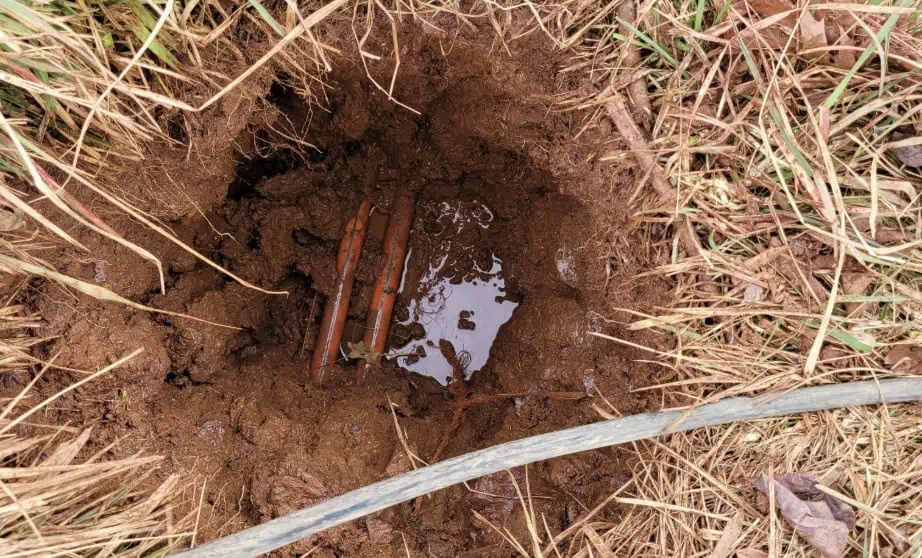
Before a single shovel breaks ground on a construction project, one of the most valuable steps a development team can take is confirming what is already underground. Test pitting is a targeted excavation method used to physically expose and visually verify the location, depth, and condition of buried utilities before active construction begins.
Utility strikes are one of the most avoidable problems in civil site development, yet they remain a persistent source of project delays, budget overruns, and serious safety incidents. Utility records and as-built drawings are frequently outdated, incomplete, or simply inaccurate. Visual confirmation through test pit excavation eliminates that uncertainty.
For developers and project managers working across complex sites, integrating test pitting into pre-construction planning is a straightforward step that pays off throughout the entire project lifecycle. Muller’s turnkey approach to site development includes this kind of proactive subsurface investigation as part of a coordinated, start-to-finish process.
How Test Pit Excavation Works
Test pit excavation follows a controlled process designed to safely expose buried infrastructure without damaging it. The goal is precision, not speed: carefully removing soil and material in a targeted area to reveal exactly what is beneath the surface.
The Basic Process
Test pits are typically excavated in areas where utility conflicts are suspected or where records suggest lines may be present. Common triggers include dense utility corridors, areas with conflicting as-built data, and locations identified during a pre-construction site investigation review.
The process generally follows this sequence:
- Utility locating is completed first (811 one-call service) to identify known lines
- Excavation begins carefully using hand tools, vacuum excavation equipment, or hydrovac units
- The pit is opened to the necessary depth to expose the utility in question
- Findings are documented: utility type, material, diameter, depth, and condition
- The excavation is properly backfilled and compacted once documentation is complete
The size and depth of each test pit varies based on the suspected utility and the complexity of the site. In sensitive or congested areas, vacuum excavation is preferred because it removes soil without the mechanical force that could damage existing lines.
Who Performs Test Pitting
Test pitting is typically performed by site development or utility contractors as part of a broader pre-construction investigation. On larger or more complex projects, it may be coordinated alongside hydro excavation and utility designating and locating services, which classify underground utilities by level of accuracy and investigation quality.
Proper coordination with utility owners, permit requirements, and safety protocols is essential. Working with a contractor that manages this process in-house reduces communication gaps and keeps the investigation phase on schedule.
Test Pitting vs. Potholing Utilities: What Is the Difference?
The terms test pitting and potholing utilities are often used interchangeably on job sites, but there are practical distinctions worth understanding depending on your project scope and objectives.
Potholing Utilities
Potholing typically refers to smaller, more targeted excavations, often performed with vacuum excavation equipment, to expose a specific utility at a single point. The goal is usually to confirm the precise location of one line before drilling, boring, or crossing it. Pothole excavations tend to be narrow in diameter and focused on a specific conflict point.
Test Pitting
Test pitting is generally a broader, more deliberate excavation intended for visual inspection across a wider area. Test pits are often larger in footprint and designed to expose multiple utilities, assess general subsurface conditions, or document existing infrastructure as part of a pre-construction site investigation.
Which Method Is Right for Your Project?
Both methods fall under the broader category of subsurface utility investigation.
Choosing between them depends on the scope of the work:
- Potholing is well-suited for a targeted conflict point, such as a single bore crossing or tie-in location
- Test pitting is better suited for early-stage investigation across a broader corridor or site
- Complex projects often use both: test pitting early in design, potholing during active construction
Either way, the underlying goal is the same: replace assumptions about what is underground with documented, verified information before construction begins.
Why Test Pitting Matters in Pre-Construction Site Investigation
Identifying what is underground before breaking ground is one of the highest-value steps in any pre-construction site investigation. The cost of a test pit is minor compared to the cost of an unexpected utility conflict mid-construction.
Utility Strike Prevention
Striking an underground utility during excavation can result in serious injury, service outages affecting surrounding properties, project shutdowns, repair costs, and significant liability exposure. Despite the widespread use of one-call systems, utility as-built records are notoriously unreliable. Lines shift over time, records are not updated after repairs, and older infrastructure is frequently mapped with limited accuracy.
Visual confirmation through test pit excavation is the only reliable method to know exactly where a utility is before construction equipment moves into the area. For underground utility exposure in high-risk zones, it should be a standard step rather than an optional one.
Project Schedule and Budget Protection
Unexpected utility conflicts discovered during active construction can cascade quickly. A single unmarked line in the wrong location can require design revisions, utility coordination delays, emergency repairs, and significant rework. These are not just inconveniences, they directly affect project timelines and final costs.
Test pitting during the pre-construction phase shifts that risk to a point in the project when adjustments are still manageable. Problems found early cost a fraction of what they cost once a crew and equipment are already on the ground.
Regulatory and Safety Compliance
OSHA excavation safety standards require employers to take protective measures before and during excavation work, including identifying and locating existing utilities. Test pitting directly supports compliance with these requirements by providing documented visual verification of underground conditions.
For projects subject to permit requirements or bond release processes, having detailed records of subsurface conditions, including test pit findings, strengthens the documentation package and can reduce friction during inspections and closeout.
When Should Test Pitting Be Used?
Not every project requires the same level of subsurface investigation, but certain site conditions and project types make test pitting especially important. When the risk of an undetected utility conflict is elevated, proactive investigation is the right call.
Test pitting is particularly valuable in the following scenarios:
- Dense utility corridors: Urban infill sites, redevelopment projects, and areas with heavy existing infrastructure are more likely to have unmarked or mislocated lines
- Sites with outdated or conflicting records: When utility as-builts are old, incomplete, or show discrepancies, visual verification fills the gap
- Projects near existing structures or active infrastructure: Excavation work in proximity to buildings, roadways, or operating utilities carries elevated risk
- Data center and mission-critical developments: Where operational reliability depends on infrastructure integrity, pre-construction investigation is a baseline requirement
- Solar and renewable energy projects: Large grading and utility installation scopes across previously undocumented sites benefit from early subsurface verification
- Bond release and permit coordination: Test pit documentation can support the verification requirements during project closeout
When in doubt, the question to ask is simple: what does a conflict cost compared to the investigation that could prevent it? In most cases, the answer makes test pitting an easy decision.
How Test Pitting Fits Into Turnkey Site Development
For developers and project managers working with a turnkey contractor, test pitting is one of several pre-construction steps that should be coordinated from the very beginning. When site investigation, utility installation, grading, and construction are managed under one roof, findings from test pits feed directly into planning decisions without the delays that come from handing information between separate firms.
Muller’s turnkey approach to civil site development integrates pre-construction investigation into the broader project workflow. That means test pit findings inform utility coordination, grading plans, and schedule sequencing before the project moves into active construction. Single-point accountability reduces miscommunication and keeps the project moving.
Key advantages of integrating test pitting into a turnkey scope include:
- Faster response to subsurface findings: the same team that investigates also executes
- Direct coordination between utility investigation and permit expediting
- Pre-construction budgeting that accounts for actual site conditions, not assumptions
- Reduced risk of scope gaps between investigation contractors and construction crews
In some cases, test pitting also uncovers existing utility damage that may warrant trenchless pipe repair before new construction begins. Identifying these conditions early keeps them from becoming mid-project surprises.
Start Your Project on Solid Ground
Test pitting is one of the most cost-effective risk management tools available in civil site development. By visually confirming what is underground before construction begins, project teams can protect their schedules, manage budgets more accurately, keep crews safe, and avoid the downstream consequences of an unexpected utility conflict.
For projects in Virginia, Maryland, Washington, DC, and across the Mid-Atlantic region, Muller provides turnkey site development services that incorporate pre-construction investigation from the first phase of planning through bond release. Whether the scope involves wet utility installation, dry utility coordination, grading, or stormwater systems, proactive site investigation is a standard part of how Muller approaches every project.
Partner with Muller for turnkey site development solutions that begin with the right groundwork. Contact us today to discuss your project.
Frequently Asked Questions About Test Pitting
What is the difference between test pitting and potholing utilities? Potholing typically involves a narrow, vacuum-excavated hole to expose one utility at a specific conflict point. Test pitting is a broader excavation used to inspect subsurface conditions across a wider area. Both are forms of subsurface utility investigation, and complex projects often use both methods at different stages of pre-construction planning.
How deep is a typical test pit? Depth depends on the suspected utility and site conditions. Shallow utility lines may only require excavation to 3 to 4 feet, while deeper infrastructure like large-diameter sewer mains or duct banks may require pits of 8 feet or more. Depth is determined by available records, utility locating results, and the specific investigation objectives.
Is test pitting required before all underground utility work? There is no universal legal requirement to perform test pitting on every project, but OSHA excavation safety standards do require identification of underground utilities before excavation begins. On sites with dense utilities, outdated records, or high-risk conditions, test pitting is strongly recommended as a best practice and may be required by specific permit conditions or project specifications.
Can test pitting reveal existing utility damage? Yes. Visual inspection during test pit excavation can reveal cracked pipe, corrosion, joint failures, and other conditions not detectable from the surface. When existing damage is found, trenchless pipe repair methods can address it before new construction begins, preventing it from becoming a larger problem later in the project.