
Sanitary Sewer Installation
Our Sanitary Sewer Installation Expertise
A sanitary sewer system that is undersized, misaligned, or improperly connected rarely fails on day one. The problems show up later, as backups, failed inspections, or a bond release that stalls on a connection nobody caught during construction.
Muller, Inc. installs sanitary sewer systems for commercial, residential, and mixed-use development across Virginia, Maryland, Washington, D.C., and the broader Mid-Atlantic region, as part of a coordinated turnkey site development process. Our crews handle everything from gravity mains and service lines to lift stations, grinder pumps, and connections into existing municipal infrastructure, so wastewater management is built right the first time and holds up under jurisdictional inspection.
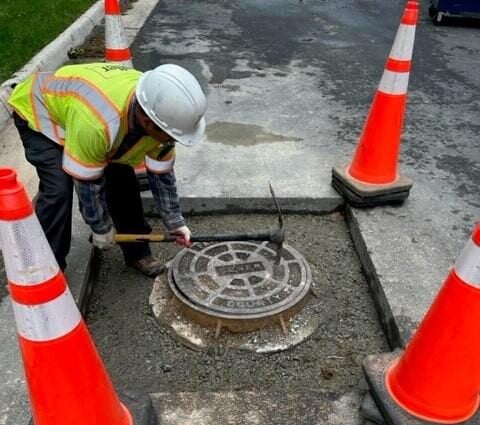
Sanitary Sewer Installation by System Type
Gravity Sewer Mains
Gravity sewer mains move wastewater using slope and elevation instead of mechanical pumps, making them the most reliable and lowest-maintenance option whenever site topography allows it.
How Muller delivers long-term performance:
- Precise engineering: Grades and elevations are set to maintain consistent flow and prevent buildup.
- Quality materials: Durable pipe and fittings are selected for the site’s soil and load conditions.
- Standards compliance: Every installation follows local regulations and industry standards.
The result is a sewer system that performs for the life of the development.
Sanitary Sewer Service Lines
Service lines connect a building or property to the sewer main, and improper installation here is one of the most common causes of backups and failed inspections later on.
What goes into every Muller service line:
- Code-compliant connections that pass inspection and hold up over time
- Quality materials built for long-term durability
- Minimal site disruption during installation
- A clean tie-in to the broader wastewater system
Connections to Existing Infrastructure
Wet tapping connects new sewer lines to existing infrastructure without interrupting service. For developers and property owners expanding a wastewater system, that means current operations keep running throughout the connection.
Because the tap is made on a live line, the work requires experienced technicians and specialized equipment to prevent spills or contamination. Muller performs wet taps that integrate cleanly into the existing system while maintaining continuous service.
Water Oil Separators & Grease Traps
Grease traps and oil-water separators intercept fats, oils, and grease before they reach the municipal sewer system, protecting both infrastructure and local water quality.
This equipment is typically required to meet local discharge regulations at facilities such as:
- Commercial kitchens and restaurants
- Automotive and fleet maintenance facilities
- Industrial and manufacturing operations
Muller plans, installs, and maintains separators and grease traps sized for each facility’s discharge volume. Proper sizing reduces the risk of plumbing failures, sewer blockages, and compliance fines.
Low-Pressure Force Mains, Grinder Pumps & Lift Stations
When gravity flow isn’t feasible, pressurized systems move wastewater from lower elevations to a connection point. These are common on sites with challenging topography or distant tie-in locations.
Component | What It Does |
Grinder pumps | Break down solids and pump wastewater from individual buildings into the force main |
Low-pressure force mains | Carry pressurized wastewater uphill or across long distances to the collection system |
Lift stations | Collect wastewater at a low point and pump it to a higher elevation where gravity flow can resume |
Muller designs, installs, and maintains these systems following industry best practices, reducing the risk of overflows and keeping wastewater moving reliably to treatment facilities.
Sanitary Sewer Installation as Part of the Site Development Process
Sanitary sewer work rarely happens in isolation. It is sequenced with the rest of a site’s utility and grading scope, and gaps between contractors at that handoff are usually where schedule delays and rework start.
Because Muller self-performs excavation and grading, waterline and storm drain installation, and dry utility installation, sewer work is sequenced alongside the rest of the utility scope instead of waiting on a separate contractor to mobilize. Where existing sewer lines or other buried utilities are unknown, our hydro excavation and utility locating services confirm what is in the ground before excavation starts.
If a system needs to be assessed or repaired after installation, our CCTV pipeline inspection and trenchless pipe repair services can diagnose and resolve issues without a full excavation. On projects that carry through to closeout, our wet utility punch work supports bond release, so the sewer system installed during construction is documented and ready to sign off.
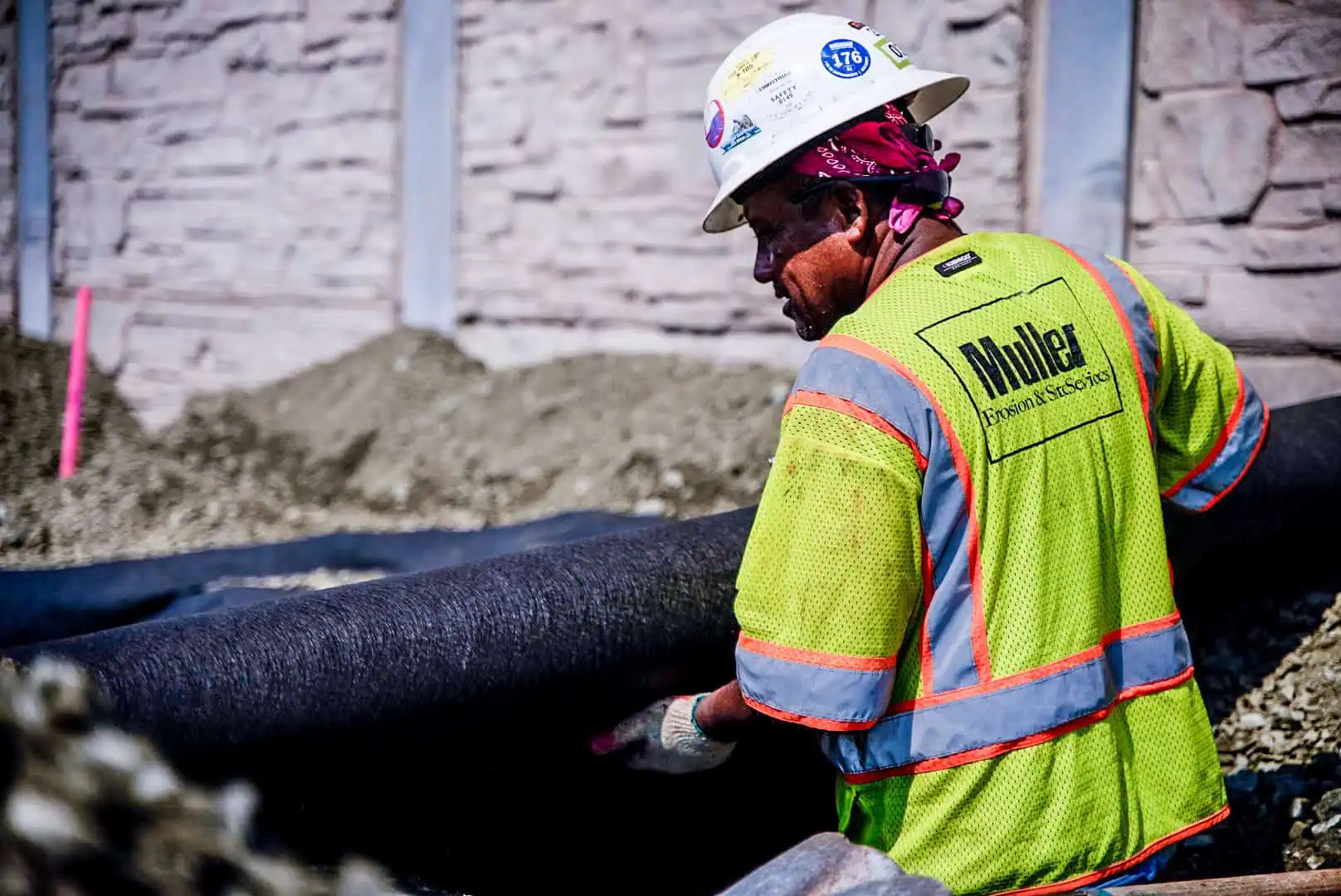
Why Choose Muller for Sanitary Sewer Installation
Sewer work has zero tolerance for guesswork. A missed slope, an improper connection, or a poorly sized lift station shows up later as a backup, a failed inspection, or a bond release that stalls on punch work. Muller, Inc. installs sanitary sewer systems as one part of a broader turnkey site development capability, which means the sewer scope is planned around the grading, utilities, and paving around it instead of treated as a standalone trade.
Our crews follow the standards and inspection requirements that apply in each jurisdiction, and we coordinate permitting so project managers are not chasing multiple contractors to get a system approved. With deep experience across Virginia, Maryland, Washington, D.C., and the Mid-Atlantic region, Muller understands local sewer authority requirements and connection standards, and we carry that knowledge from first excavation through bond release.
Other Utility Services
Sanitary sewer installation is one piece of Muller’s utility scope. We self-perform the full range of utility work, keeping your project under one point of accountability:
Utilities Service Areas
Our utility services are available throughout the DMV region.
Virginia
Alexandria, VA
Annandale, VA
Arlington, VA
Centreville, VA
Dale City, VA
Fairfax, VA
Fredericksburg, VA
Herndon, VA
Manassas, VA
McLean, VA
Reston, VA
Maryland
Baltimore, MD
Bethesda, MD
Frederick, MD
Gaithersburg, MD
Germantown, MD
Silver Spring, MD
Washington, DC
Washington, DC
"*" indicates required fields
Sanitary Sewer Installation FAQs
What is the difference between a gravity sewer main and a low-pressure force main?
Gravity sewer mains use slope and elevation to move wastewater without mechanical assistance, making them the preferred option when topography allows. Low-pressure force mains use grinder pumps and lift stations to move wastewater from lower elevations to a connection point when gravity flow is not feasible. Muller installs both, matching the system to what the site’s topography requires.
When is wet tapping needed for a sanitary sewer connection?
Wet tapping is needed when a new sewer line has to connect to an existing, active sewer main without interrupting service. It is common on expansion projects and developments connecting into municipal infrastructure that cannot be shut down. Muller performs wet taps under pressure using experienced technicians to avoid spills or contamination.
Do commercial kitchens need grease traps for sanitary sewer connections?
Most jurisdictions require grease traps or oil and water separators for commercial kitchens, automotive facilities, and industrial operations that discharge fats, oils, or grease into the sewer system. Sizing depends on the facility’s discharge volume. Muller plans and installs separators sized correctly for the facility to meet local discharge regulations and avoid compliance fines.
What permits are required for sanitary sewer installation in Virginia, Maryland, or Washington, D.C.?
Requirements vary by jurisdiction and typically involve approval from the local sewer authority in addition to standard site development permitting. Connection points, materials, and inspection requirements differ by locality. Muller coordinates permitting as part of pre-construction planning so sewer work is not delayed waiting on approvals.
Can Muller connect new sewer lines to existing municipal infrastructure without disrupting service?
Yes. Wet tapping allows a new connection to be made to an active sewer main under pressure, so the existing system keeps running throughout the process. This is the standard approach for developments and expansions connecting into municipal sewer infrastructure.
What areas does Muller serve for sanitary sewer installation?
Muller provides sanitary sewer installation services throughout Virginia, Maryland, and Washington, D.C., including Alexandria, Arlington, Fairfax, Reston, Manassas, Fredericksburg, Richmond, Bethesda, Gaithersburg, Silver Spring, and surrounding communities across the Mid-Atlantic region.