Utility construction moves fast, yet one missed step can lead to injury, fines, or delays. Every utility site, from large data center builds to local water main replacements, faces daily pressures to balance speed, safety, and compliance. A single violation can halt operations, damage reputations, and trigger costly rework.
This guide not only lists the violations safety managers and superintendents see most often on wet and dry utility jobs, but also explains why they happen, the hidden costs they create, and the practical steps your crew can take to stay compliant, protect workers, and keep projects moving in the Mid-Atlantic.
Quick Reference: 10 Common Violations and Risks
| # | Violation | Quick Risk Summary |
| 1 | Utility Locating and Marking Done Incorrectly or Not at All | Risk of striking live utilities causing outages, injury, or damage |
| 2 | Excavations Without Protective Systems | Cave-ins and entrapment hazards |
| 3 | Equipment Operating Too Close to Overhead Power Lines | Electrocution or arc flash risk |
| 4 | Poor Lockout/Tagout of Energy Sources | Unexpected energization or release of stored energy |
| 5 | Confined Space Entry Without Controls in Vaults and Manholes | Oxygen deficiency, toxic gas, engulfment |
| 6 | Missing or Poorly Maintained Erosion and Sediment Controls | Flooding, slope failure, environmental penalties |
| 7 | Unsafe Material Handling and Storage | Struck-by, trips, spills, or roll-offs |
| 8 | Inadequate Traffic Control Around Work Zones | Vehicle intrusions and pedestrian conflicts |
| 9 | Damaged or Uninspected Equipment in Service | Mechanical failures, fires, injuries |
| 10 | Insufficient Safety Training and Documentation | Higher incident rates, OSHA penalties |
1. Inadequate Utility Locating and Marking
Identify all public, private, and abandoned utilities before work begins. Include temporary lines and unrecorded laterals, and account for seasonal factors that can alter depths.
Risks: Striking utilities, service outages, injuries, costly claims, and environmental contamination.
How to Avoid It:
- Call 811 and use certified private locators.
- Compare marks to as-builts, GIS data, municipal records, and surveys.
- Investigate abandoned lines.
- Re-mark as needed and document.
- Use potholing or hydro excavation to verify.
- Keep locator calibration records and train operators.
- Verify all markings before excavation.
Pro Tip: Keep a live utility conflict log and integrate it into daily reports for transparency.
2. Excavations Without Protective Systems
Any trench can fail, sometimes without warning. Soil type, depth, moisture content, and adjacent loads all influence stability, and conditions can change quickly due to weather or nearby work.
Risks: Cave-ins, worker entrapment, struck-by hazards, utility strikes, and schedule shutdowns.
How to Avoid It:
- Classify soil and choose sloping, shoring, shielding, or trench boxes accordingly.
- Keep spoil piles, heavy equipment, and materials set back from the edge.
- Provide safe egress every 25 feet of lateral travel for deeper excavations.
- Inspect excavations and protective systems daily and after weather changes.
- Control water accumulation with pumps or diversion.
- Ensure a competent person is on-site to make safety decisions.
3. Working Too Close to Overhead Power Lines
Overhead lines can be deceptively close, and cranes, excavators, or dump bodies can breach minimum approach distances in seconds. Line sag, wind sway, or equipment bounce can reduce clearances.
Risks: Electrocution, arc events, and equipment damage.
How to Avoid It:
- Identify line voltage, establish required clearance, and mark no-go zones.
- Use a spotter and proximity alarms.
- Coordinate with utilities to de-energize or insulate lines.
- Lower booms when traveling under lines and post clearance signage.
- Plan lifts to minimize work near energized lines.
- Train crews on line hazards and emergency response.
4. Poor Lockout/Tagout (LOTO)
Live energy can hide in valves, switchgear, temporary feeds, stored pressure, and automatic controls.
Risks: Electric shock, arc flash, unexpected start-up, and high-pressure releases.
How to Avoid It:
- Maintain written LOTO procedures for all energy types.
- Apply group locks and verify zero-energy state before work.
- Use test instruments to confirm de-energization.
- Train all personnel, including subcontractors.
- Audit LOTO logs weekly.
5. Confined Space Entry Without Controls
Vaults, manholes, and large pipes can be permit-required confined spaces, with conditions that change rapidly.
Risks: Oxygen deficiency, toxic gases, flammable atmospheres, engulfment, or structural failure.
How to Avoid It:
- Test atmosphere before and during entry.
- Ventilate spaces and use retrieval systems.
- Keep a trained attendant topside.
- Control flow sources with verified isolation and LOTO.
- Use a written entry permit and ensure rescue readiness.
- Train all crew on confined space hazards and procedures.
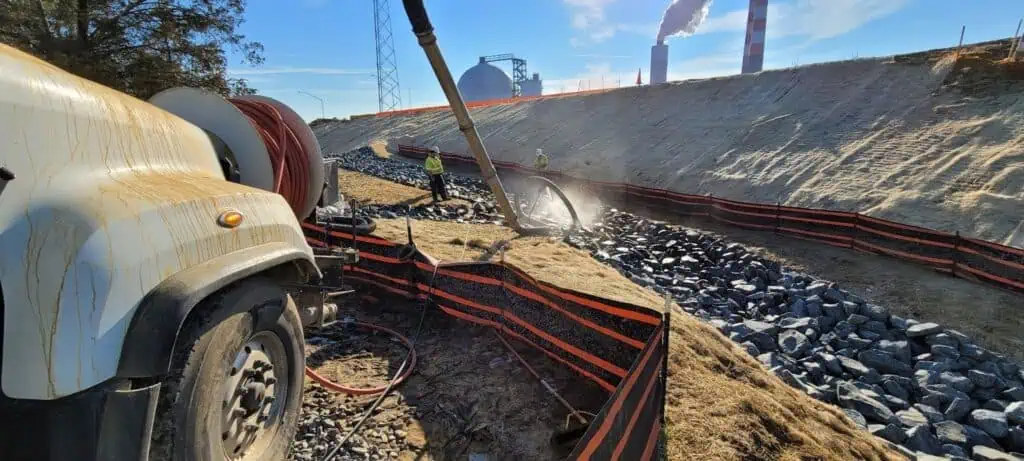
6. Missing or Poorly Maintained Erosion and Sediment Controls
Erosion and sediment controls protect site stability and compliance.
Risks: Flooding, slope failures, clogged inlets, and penalties.
How to Avoid It:
- Install controls as per plan.
- Inspect after storms or grading changes.
- Keep stockpiles covered and controls intact.
- Use swales, berms, and underdrains.
- Train crews to spot and fix failures immediately.
7. Unsafe Material Handling and Storage
Materials need secure storage from delivery to installation.
Risks: Struck-by incidents, roll-offs, trips, and spills.
How to Avoid It:
- Store pipe on level dunnage with chocks and bands.
- Keep aisles clear and organized.
- Cap open pipe and segregate chemicals with containment.
- Use certified rigging and inspect before use.
- Stage materials close to use without blocking access.
8. Inadequate Traffic Control Around Work Zones
Work near active roads needs strict control.
Risks: Vehicle intrusions, collisions, and pedestrian conflicts.
How to Avoid It:
- Follow approved MUTCD-aligned traffic control plans.
- Use signage, barriers, and certified flaggers.
- Provide high-visibility apparel and lighting.
- Separate haul routes from public traffic.
- Review setups daily and adjust for conditions.
- Train crews on work zone safety.
9. Damaged or Uninspected Equipment in Service
Defects can escalate quickly under pressure.
Risks: Mechanical failure, fires, leaks, and struck-by hazards.
How to Avoid It:
- Inspect equipment daily and log results.
- Lock out defective gear until repaired.
- Service per manufacturer intervals.
- Train operators to spot warning signs.
- Use certified operators and follow checklists.
- Keep repair kits on-site.
10. Insufficient Safety Training and Documentation
Training prevents violations and builds hazard awareness.
Risks: Repeat incidents, stop-work orders, higher EMR, and fines.
How to Avoid It:
- Conduct site-specific orientations and daily talks.
- Keep certifications current.
- Document and review JSAs/JHAs.
- Track near misses and corrective actions.
- Provide refresher courses and drills.
Partner With Muller for a Safer, More Compliant Utility Project
When it comes to utility site safety, prevention is always better than reaction. At Muller, our team brings decades of experience in turnkey site development, from pre-construction planning to final inspections. We integrate safety into every stage, ensuring compliance with OSHA, local regulations, and industry best practices, so your project stays on schedule and on budget.
Why Developers Choose Muller:
- End-to-End Service: Clearing, grading, wet and dry utility installation, stormwater systems, paving, and more, all under one roof.
- Proven Safety Culture: Daily safety huddles, third-party audits, and certified crews.
- Local Expertise: Knowledge of Mid-Atlantic permitting, environmental requirements, and utility coordination.
Ready to build with confidence? Contact Muller today to discuss your project and see how we can help you avoid costly safety violations while delivering exceptional results.