Most construction projects don’t fail during framing or finishing. They fail long before the first structural beam goes up. Poor planning is one of the most common and most preventable root causes, and construction site development is where that planning either happens or doesn’t.
Every decision made, or skipped, during site development ripples through every phase that follows. This article breaks down what that looks like in practice, and what separates a well-executed site from one that creates headaches down the road.
At a Glance
| What site development actually covers | Far more than grading. It’s the full process from clearing and utilities to stormwater, permitting, and final paving. |
| Why it drives project outcomes | Poor site planning is one of the leading causes of construction cost overruns and schedule delays. |
| The process at a glance | Eight phases, each one setting up the next, from pre-construction assessment through bond release. |
| The benefits of getting it right | Fewer delays, lower change order risk, faster permit approvals, smoother bond release. |
| What happens when it goes wrong | Permitting failures, stormwater violations, and coordination gaps that compound through the entire project. |
| Best practices | Seven principles that apply across commercial, data center, and solar projects. |
| How Muller approaches it | Fully integrated, single-contract site development across Virginia, Maryland, and DC. |
What Is Construction Site Development?
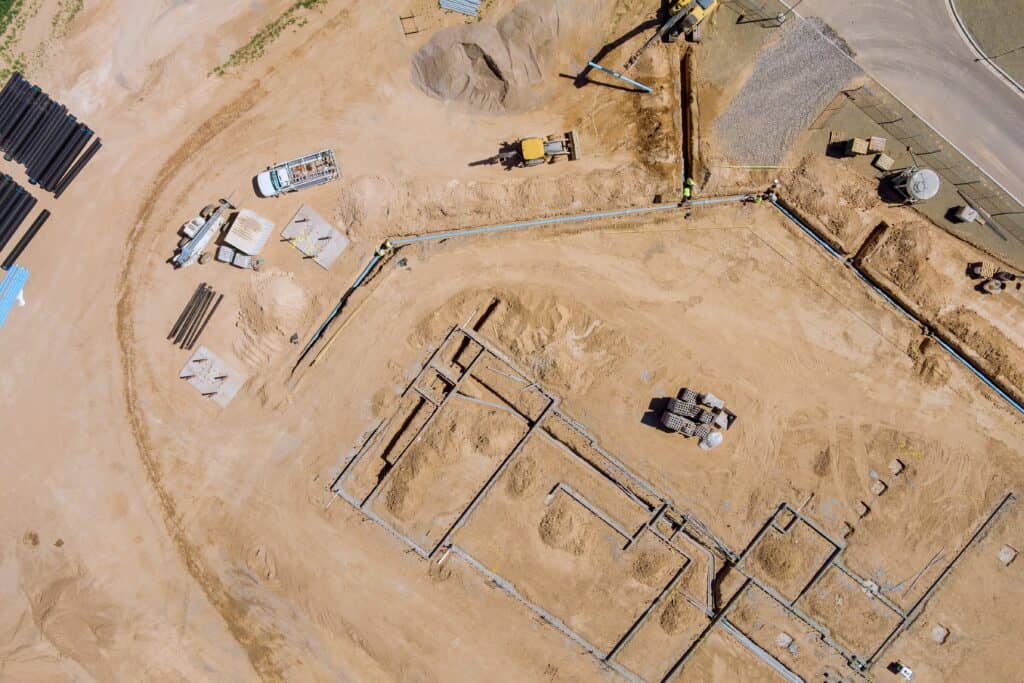
Construction site development is the full process of transforming raw or undeveloped land into a construction-ready site. It encompasses everything from initial clearing and utility installation to stormwater systems, permitting, and final grading, a broader scope than most people expect, and the foundation every downstream phase of construction depends on.
It’s worth drawing a distinction between site preparation and site development. Site preparation refers to the physical groundwork: clearing, grading, and compaction. Site development is the broader process that includes planning, utility coordination, environmental compliance, and the full build-out of infrastructure the project depends on.
When all of these elements are managed under one contractor, known as turnkey site development, the result is a more coordinated, more accountable, and faster project.
For a deeper look at what’s involved, visit our site development services page or read our full site development guide.
How Construction Site Development Sets the Foundation for Project Success
Here’s the reality that developers and project managers know well: the problems that derail construction projects almost never come out of nowhere. They come from decisions that were deferred, skipped, or underfunded during site development.
Consider what the data shows. According to a McKinsey review of more than 300 billion-dollar-plus megaprojects, average cost overruns ran approximately 80% and schedule delays averaged around 50%. These aren’t outliers; they’re patterns, and poor pre-construction planning is consistently identified as one of the leading drivers.
The connection between site planning and project outcomes is straightforward. A site that’s been thoroughly assessed, properly graded, correctly utility-coordinated, and fully permitted before construction begins gives every downstream phase something solid to build on. A site that skips or rushes those steps creates a cascade: unexpected soil conditions force foundation redesigns, utility conflicts require expensive re-routing, stormwater failures trigger regulatory stop-work orders, and permitting gaps delay occupancy.
The ripple effect runs in both directions. Good site development compresses timelines and reduces surprises. Poor site development creates them.
The Construction Site Development Process: A Brief Overview
A well-executed site development project moves through eight distinct phases, each one setting up the next:
- Site assessment and pre-construction planning: surveys, soil testing, environmental review, and budgeting
- Clearing, grubbing, and demolition: strategic removal of vegetation, structures, and debris
- Erosion and sediment control installation: required before earthmoving begins in Virginia and Maryland
- Excavation and grading: shaping the land for drainage, foundations, and infrastructure routing
- Wet and dry utility installation: water, sewer, storm drain, electrical conduit, telecom
- Stormwater management system installation: ponds, bioswales, underground detention, permeable paving
- Permitting, inspections, and regulatory compliance: across Virginia, Maryland, and DC jurisdictions
- Final grading, paving, and site completion: concrete flatwork, asphalt, punch list, bond release prep
For a detailed breakdown of each phase, read our full site development guide.
Key Benefits of Construction Site Planning
The case for investing in proper site planning isn’t abstract. It shows up in specific, measurable ways across every phase of a project.
| Benefit | What It Means in Practice |
| Reduced Project Delays | Proactive site assessment eliminates reactive problem-solving mid-build. Known soil conditions, utility layouts, and drainage requirements keep the schedule intact. |
| Lower Risk of Cost Overruns | Undiscovered rock, groundwater, and contaminated soil are among the most expensive mid-project surprises. Pre-construction investigation identifies them while solutions are still cheap. |
| Improved Worker Safety | Properly graded, organized sites with clear access routes and secured staging areas reduce accident risk and liability exposure throughout construction. |
| Faster Permit Approvals | Complete documentation, compliant stormwater design, and familiarity with local reviewer expectations mean submissions that don’t bounce back. |
| Long-Term Infrastructure Reliability | Utilities installed correctly, stormwater systems sized to capacity, and grading that handles real drainage loads pay off for decades — not just through certificate of occupancy. |
| Smoother Bond Release | Sites built with compliance in mind, with clean documentation and fully functioning infrastructure, move through bond release without drawn-out punch list battles. |
| Single Point of Accountability | Turnkey site development puts one contractor in charge of the full process, one project manager, one communication channel, no gaps between subs. |
Taken together, these benefits point to the same conclusion: the earlier site planning happens, the fewer surprises show up later. That’s the difference between a project that stays on schedule and one that doesn’t.
How Weak Site Development Affects Project Success
Strong site development doesn’t just make the site work easier, it protects the entire project. When it’s done poorly, the consequences rarely stay contained to the site phase. They compound.
Permitting Failures Push Back Your Entire Project Timeline
A missed requirement, an incomplete application, or unfamiliarity with local reviewer expectations can add weeks to your schedule, weeks that affect every trade scheduled to follow. In the DC Metro region, where Virginia, Maryland, and local jurisdictions each layer in their own requirements, permitting delays are one of the most common reasons projects fall behind before vertical construction even begins.
Stormwater Non-Compliance Creates Legal and Financial Exposure
Regulators in Virginia and Maryland have become increasingly aggressive about stormwater enforcement. An undersized BMP system, or a design that meets only construction-phase minimums instead of post-construction permit requirements, can trigger stop-work orders, Notice of Violation fines, and expensive rework at project close, right when you’re trying to reach bond release.
Fragmented Site Management Creates Coordination Failures That Ripple Upward
When grading, utilities, and stormwater work are split between separate contractors, gaps are almost inevitable. One sub finishes grading before utilities are routed. Another installs drainage that conflicts with the next phase of earthwork. These aren’t isolated site problems, they show up as schedule slippage, change orders, and budget pressure that follows the project all the way through to completion.
Construction Site Preparation Best Practices
Whether you’re managing a commercial development, a data center campus, or a solar farm, these practices apply across the board:
- Conduct a thorough site assessment before any work begins. Topographic survey, soil testing, and environmental review are not optional.
- Install erosion and sediment controls before the first pass of earthmoving equipment. Regulators require it, and experienced contractors do it anyway.
- Coordinate utility design and installation early, before grading reshapes the site in ways that complicate trenching.
- Design stormwater systems to meet post-construction permit requirements, not just construction-phase minimums.
- Build permitting timelines into the master project schedule as a parallel workflow, not a downstream afterthought.
- Use pre-construction budgeting to scope site development accurately, including contingency for subsurface unknowns.
- Choose a contractor with turnkey capabilities. One point of accountability reduces coordination overhead and closes scope gaps before they become change orders.
These aren’t complicated principles, but they require discipline, coordination, and a contractor who understands how each phase connects to the next. When that foundation is in place, the rest of the project has room to succeed.
How Muller Approaches Turnkey Site Development in the Mid-Atlantic
Muller Inc‘s site development capabilities grew out of nearly two decades of civil construction work in Virginia, Maryland, and DC, starting with erosion control and expanding into the full turnkey scope that developers and GCs in the region rely on today.
The difference is integration. Every phase, clearing, grading, utilities, stormwater, paving, and bond release, runs under one contract, one project manager, and one team. No gaps between subs. No finger-pointing when conditions change. Just faster resolution and cleaner handoffs from start to finish.
That operational discipline has been applied to some of the region’s most demanding projects, including Transform-66 and National Harbor, and it’s what shows up on every commercial engagement we take on.
Contact Muller today to discuss your next site development project in the DC Metro area.
Frequently Asked Questions
What is construction site development? The full process of preparing land for construction, including clearing, grading, utilities, stormwater, erosion control, and permitting. It’s the foundation every downstream phase depends on.
What does turnkey site development include? At Muller: clearing and demolition, excavation and grading, erosion control, wet and dry utility installation, stormwater systems, paving, and bond release, all under one contract.
What should I look for in a site development contractor? Full-scope capability, regional permitting experience, and a single point of accountability. A contractor who owns the entire process, rather than coordinating between subs, closes the gaps that cause most site development problems.