Hydro excavation has become the gold standard for safe, non-destructive digging in utility-rich environments. At the heart of this process are jet vac trucks, powerful, dual-purpose machines that combine high-pressure water and vacuum technology to uncover underground infrastructure without damaging it. As utility networks expand across the Mid-Atlantic, understanding how jet vac trucks work in hydro excavation is essential for developers, utility managers, and construction professionals.
What is Hydro Excavation?
Hydro excavation is a non-mechanical digging method that uses pressurized water to break up soil and an industrial vacuum to remove the resulting slurry. This technique allows crews to excavate soil with minimal disturbance. Unlike traditional digging methods like backhoes or trenchers, hydro excavation services cause minimal disruption, making them ideal for sensitive environments and densely developed urban areas.
Key advantages include:
- Precision: Targeted digging reduces the risk of accidental utility strikes.
- Safety: Less mechanical excavation equipment means fewer hazards for workers and infrastructure.
- Compliance: Satisfies utility locating regulations and supports stormwater and erosion control requirements.
- Efficiency: Faster cleanup and trenching shorten project timelines.
- Versatility: Ideal for sewer inspections, inlet protection maintenance, piling hole excavation, and cold weather digging.
From a regulatory and environmental standpoint, hydro excavation offers unmatched compliance advantages. Unlike traditional digging, it prevents uncontrolled discharge of sediment or debris. Hydrovac equipment helps manage spoils and runoff, supporting BMPs (Best Management Practices) for erosion control plans, stormwater permits, and site-specific BMPs.
Jet Vac Trucks: The Power Behind Hydro Excavation
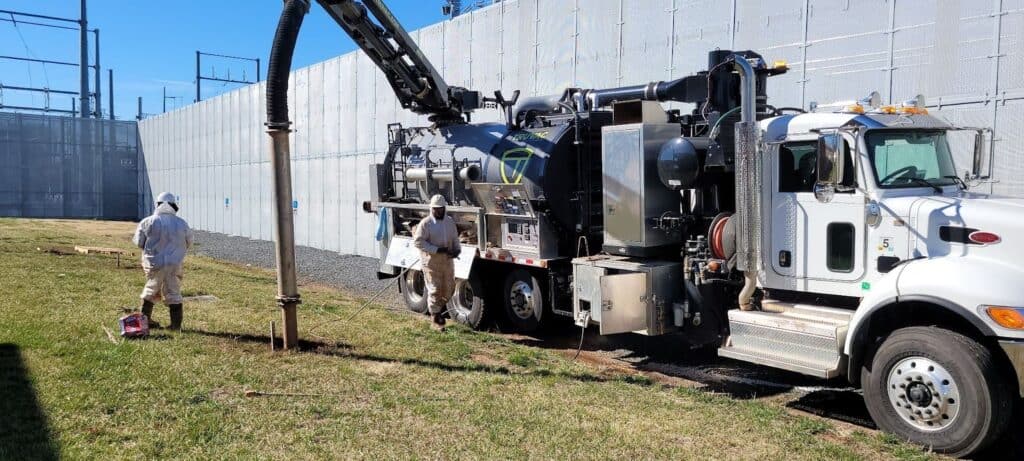
Jet vac trucks are multi-functional vehicles specifically engineered for hydro excavation. Each truck features two critical systems:
- Jetting System: Delivers high-pressure water (up to 4,000 PSI) to cut through soil, clay, rocks, or frozen ground.
- Vacuum System: Uses a powerful vacuum source, often a positive displacement blower, to suction the loosened slurry into an onboard debris tank.
This combination allows crews to dig with surgical precision while keeping the excavation area clean and safe. Unlike conventional excavation tools, jet vac trucks reduce collateral damage and limit the need for costly follow-up repairs. They’re especially effective in trenchless excavation applications where minimal surface disruption is critical, such as erosion control zones, stormwater maintenance, and data center campuses.
Why Jet Vac Trucks Matter for Safe Utility Digging
Hydro excavation, powered by jet vac trucks, is the preferred method when working near:
- Telecom and fiber optic lines
- Gas and water mains
- Electrical duct banks
- Sewer laterals and storm drains
Their ability to safely expose underground utilities without physical contact drastically reduces the risk of utility strikes, one of the leading causes of delays, accidents, and regulatory violations on job sites. The hydrovac unit’s ability to reach greater depths and handle various diameters of pipes and conduits provides lower risk during complex excavation projects.
Jet vac trucks are also equipped to operate in tight or urban environments, such as the busy streets of Washington, D.C., or compact data center campuses in Northern Virginia. In colder climates or frozen soil conditions, the truck’s heated water system ensures uninterrupted excavation all year long. This makes them ideal for supporting winter utility work, especially where cold-weather digging conditions are a concern.
Where Jet Vac Trucks Excel: Common Applications
Hydro excavation services using jet vac trucks are especially valuable in:
1. Utility Potholing / Daylighting
Exposing existing utilities to confirm their exact horizontal location before construction begins. This is essential to prevent costly strikes and comply with 811 call-before-you-dig regulations. Hydro excavation equipment is critical to safely locate underground utilities during this process.
2. Slot Trenching
Digging narrow trenches for cable or pipe installation without damaging adjacent lines. Common in dry utility installation for data centers and telecom infrastructure. The boom component of the truck aids in maneuvering the vacuum hose with accuracy across confined spaces.
3. Storm Drain and Debris Cleaning
Removing sediment, sand, and rough debris from catch basins, inlet protection devices, or underground stormwater management systems. The onboard debris tank and air conveyance system make cleanup faster and more efficient.
4. Data Center Site Development
Excavating near mission-critical infrastructure like power conduits, duct banks, and cooling water lines. Essential in trenchless utility installations to reduce risk and downtime.
5. Renewable Energy Projects
Safely installing utility tie-ins on solar farms or wind energy sites. Jet vac trucks support clean energy development while ensuring underground facilities remain undisturbed.
These are just a few examples of how hydro excavation applications help teams avoid delays and stay compliant with local and federal regulations.
Built for Compliance, Cost Control, and Clean Worksites
Jet vac trucks support more than just safe digging; they help ensure:
- Regulatory compliance with local, state, and federal utility locating laws
- Cleaner job sites that minimize erosion and sediment runoff
- Fewer delays due to damaged infrastructure or cleanup needs
- Improved budget control by reducing unexpected repair costs and downtime
- Less labor is required for excavation and restoration
Because hydro excavation offers a much cleaner and more targeted dig than mechanical excavation, post-project restoration is simpler and cheaper. There’s less need for grading, landscaping, or reseeding, which helps keep projects under budget and reduces environmental impact.
Partner with a Trusted Excavation Expert
Muller, Inc. is an industry leader in hydro excavation across Virginia, Maryland, and Washington, D.C. Our hydro excavation trucks and crews are trained, certified, and equipped to handle even the most complex excavation tasks, from utility potholing to stormwater system maintenance.
We bring:
- Decades of Mid-Atlantic utility infrastructure expertise
- Full regulatory knowledge and compliance support
- Turnkey coordination with permitting, grading, utility, and erosion control teams
- A documented record of success in excavation projects for public and private clients
Muller’s certified crews are trained in OSHA safety protocols, confined space entry, and wet/dry utility coordination, ensuring your excavation projects benefit not only from advanced tools but from highly experienced professionals who understand how to maximize performance while minimizing risk.
Elevating Excavation Standards with Jet Vac Technology
Jet vac trucks are not just an upgrade; they are the standard for modern, safe, and compliant hydro excavation. Whether you’re uncovering buried underground pipes, trenching for duct banks, or cleaning stormwater structures, Muller’s expert team ensures the job is done safely, efficiently, and to code.
Ready to dig smarter? Contact Muller today to schedule hydro excavation services with our experienced jet vac crews.
FAQ: Jet Vac Trucks & Hydro Excavation
Q: What are the maintenance requirements for a jet vac truck?
Like any heavy-duty equipment, jet vac trucks require routine care to stay reliable and efficient. Preventative maintenance includes checking hose integrity, inspecting the debris tank and vacuum systems, cleaning filters, lubricating moving parts, and monitoring water pump pressure. Proper upkeep extends equipment life, ensures safe operation, and minimizes costly downtime.
Q: Can I use hydro excavation in areas with high water tables?
Yes, but it requires experience and the right approach. Hydro excavation can be performed near high water tables as long as proper spoil management and dewatering techniques are used. Jet vac trucks help manage slurry collection effectively, making them suitable for coastal or flood-prone regions.
Q: What permits or environmental regulations apply to hydro excavation projects?
Regulations vary by region, but many jurisdictions require stormwater protection measures, sediment containment plans, and erosion control strategies. In some cases, permits are needed for work near wetlands or public rights-of-way. Working with a compliant contractor like Muller ensures your project meets local, state, and federal regulations.
Q: Does hydro excavation reduce the risk of service outages during utility work?
Absolutely. By exposing utilities without physically striking them, hydro excavation dramatically reduces accidental service interruptions to gas, water, telecom, or power lines. This minimizes public disruption, protects workers, and avoids fines or penalties associated with utility damage.
Q: Why should I invest in a jet vac truck for my operation?
Owning a jet vac truck provides long-term savings and unmatched flexibility for utility and construction companies. Instead of outsourcing hydro excavation services or renting equipment, an in-house unit allows your team to respond faster to project needs, reduce downtime, and control scheduling. With rising demand for non-destructive digging and utility locating, owning your own hydrovac unit positions your business to handle a wider range of jobs, improve margins, and stay competitive in both private and municipal bids.
Q: What’s the difference between vacuum excavation and hydro excavation?
Hydro excavation uses high-pressure water to break up the soil, while vacuum excavation can use either air or water as the medium. Air excavation is less effective in frozen or compacted soils, making hydro excavation the preferred option in most construction and utility contexts, especially when precision and depth are critical.
Q: Can jet vac trucks operate on active commercial sites without disruption?
Yes. Jet vac trucks are specifically designed to work in tight urban spaces and around active job sites. Their ability to cleanly excavate and immediately remove debris ensures minimal interruption to ongoing work. This is especially valuable in locations like hospitals, schools, and data centers, where operational downtime is not an option.