Maryland has long been recognized as a leader in stormwater management and environmental protection. With the Chesapeake Bay serving as one of the nation’s most valuable natural resources, the state takes a proactive approach to minimizing runoff pollution and protecting local watersheds. Effective stormwater management not only preserves environmental integrity but also supports safe, sustainable development across the state.
The Maryland Department of the Environment (MDE) is responsible for regulating and enforcing stormwater requirements statewide. Working closely with counties and municipalities, MDE ensures that every project, from residential construction to large-scale industrial development, complies with the Maryland Stormwater Management Act and associated NPDES regulations.
Overview of Maryland’s Stormwater Management Framework
Maryland’s stormwater regulations are grounded in the federal Clean Water Act and the EPA’s National Pollutant Discharge Elimination System (NPDES) requirements. The Maryland Stormwater Management Act of 2007 transformed the way development projects manage runoff by introducing Environmental Site Design (ESD) practices to the maximum extent practicable.
Under this framework, the MDE provides statewide oversight while counties such as Montgomery, Anne Arundel, and Prince George’s administer delegated programs. These local agencies are responsible for plan review, permit issuance, and inspections, ensuring that stormwater management practices meet both state and regional goals for Chesapeake Bay restoration.
When a Stormwater Permit Is Required
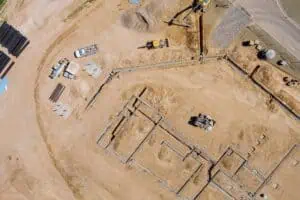
In Maryland, any project that disturbs 5,000 square feet or more of land must obtain local Erosion and Sediment Control (E&S) approval, while projects disturbing one acre or more require coverage under the NPDES General Permit for Construction Activity.
Developers must submit both a Stormwater Management Plan and an Erosion & Sediment Control Plan before construction begins. These documents outline how stormwater runoff will be controlled during and after construction. MDE recommends integrating stormwater controls early in the design phase to minimize costly revisions during review.
Stormwater Design Standards and ESD Requirements
Maryland’s approach to stormwater design is centered on Environmental Site Design (ESD), which aims to replicate natural hydrology by treating runoff where it originates. ESD emphasizes smaller, distributed practices that reduce runoff volume, filter pollutants, and recharge groundwater.
Common ESD techniques include:
- Micro-bioretention areas and rain gardens to capture and filter stormwater on-site.
- Permeable pavements that allow infiltration and reduce impervious surface impacts.
- Green roofs and infiltration trenches to manage runoff in dense urban settings.
The Maryland Stormwater Design Manual provides technical standards and design criteria for ESD implementation. In many areas, including Montgomery and Prince George’s Counties, developers are encouraged, or required, to adopt innovative ESD features to exceed baseline water quality goals.
Post-Construction Responsibilities
After construction is complete, long-term operation and maintenance become critical to sustaining stormwater facility performance. Property owners, HOAs, and facility managers are responsible for conducting annual inspections, maintaining vegetation and structural integrity, and retaining inspection documentation for MDE review.
Maintenance agreements and recorded easements are typically required to ensure facilities remain functional over time. Partnering with an experienced maintenance provider like Muller ensures consistent performance, accurate reporting, and compliance with MDE and local standards.
Compliance and Enforcement
MDE and delegated local agencies actively enforce stormwater requirements through inspections and compliance reviews. Noncompliance can result in fines, stop-work orders, or project delays.
Common issues include:
- Inadequate BMP or ESD installation.
- Poor maintenance or vegetation management.
- Missing or incomplete inspection documentation.
Maryland’s stormwater regulations also support the state’s Chesapeake Bay Total Maximum Daily Load (TMDL) commitments, which set nutrient and sediment reduction targets. Developers play a direct role in meeting these environmental goals through effective stormwater planning, implementation, and maintenance.
Regional and Local Considerations
Each county in Maryland may administer unique stormwater management programs, review procedures, and timelines. Montgomery, Anne Arundel, Prince George’s, and Baltimore Counties have delegated authority to issue permits and conduct inspections, with distinct local requirements.
Coastal and urban areas may also have additional constraints, such as stormwater retrofitting for redevelopment projects or green infrastructure incentives for ESD integration. Understanding these regional variations is key to ensuring complete compliance with both state and local regulations.
How Muller Supports Stormwater Compliance in Maryland
Muller, Inc. provides comprehensive stormwater management services across Maryland’s residential, commercial, and industrial sectors. Our team offers inspections, facility maintenance, and compliance documentation to meet MDE and local jurisdictional requirements.
Beyond maintenance, Muller supports Chesapeake Bay protection by implementing sustainable stormwater practices that align with ESD principles. Our local expertise ensures that clients stay compliant, efficient, and environmentally responsible.
Navigating Stormwater Compliance in Maryland
Maryland’s commitment to stormwater innovation sets a high bar for developers and property owners alike. By prioritizing ESD, maintaining accurate records, and partnering with experienced professionals, developers can ensure both compliance and long-term site sustainability.
Contact Muller, Inc. to learn how our experienced team can help you navigate Maryland’s stormwater compliance requirements efficiently, responsibly, and with confidence.