Combined sewer systems in many older cities were designed decades ago to carry both stormwater and wastewater through a single pipe network. While this design was efficient at the time, aging infrastructure, increased development, and heavier storm events have pushed these systems beyond their original capacity.
Frequent jetting of combined sewers is one of the most effective preventative maintenance strategiesmunicipalities can implement to reduce blockages, improve flow capacity, and minimize overflow risk. For public works departments and utility managers, proactive cleaning is not just maintenance. It is infrastructure protection, regulatory risk management, and environmental stewardship.
Quick Facts: Combined Sewer Overflows and Maintenance
- Many combined sewer systems in the Mid-Atlantic region are over 75 years old
- Sediment buildup can reduce pipe capacity by 10 to 30 percent over time
- Even minor debris restrictions can significantly increase surcharge risk during heavy rain
- Preventative jetting is significantly less costly than emergency overflow response and environmental remediation
What Are Combined Sewer Overflow Events?
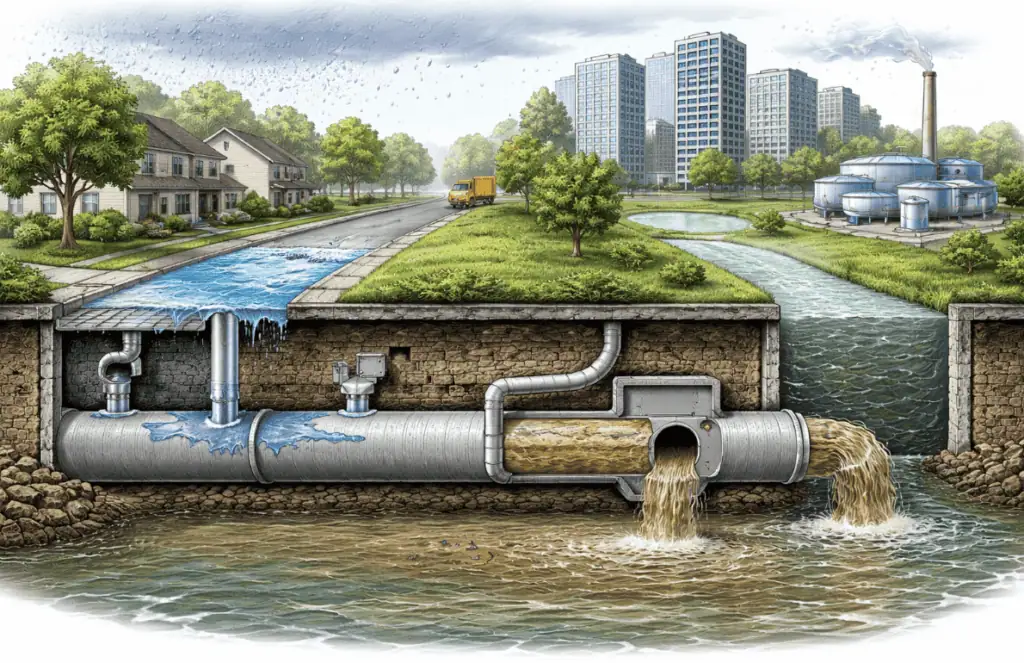
A combined sewer overflow occurs when a combined sewer system exceeds its capacity during heavy rainfall or snowmelt. Because both stormwater and sanitary wastewater share the same pipe network, excess flow can overwhelm the system and discharge untreated water into nearby waterways.
How Combined Sewer Systems Work
Combined systems collect wastewater from homes and businesses while also capturing runoff from streets, rooftops, and other impervious surfaces. Under normal weather conditions, flow is directed to a treatment facility.
During significant storm events, however, runoff volumes increase rapidly. If pipes are partially restricted by sediment, debris, or structural deterioration, the system can surcharge, increasing the likelihood of overflow events.
Why Aging Infrastructure Increases Risk
Older combined sewer systems face compounding challenges:
- Sediment buildup reduces effective pipe diameter
- Debris accumulation restricts hydraulic flow
- Structural deterioration creates internal obstructions
- Increased impervious surfaces raise runoff volume
In cities throughout Virginia, Maryland, Washington DC, and surrounding Mid-Atlantic regions, legacy sewer networks were not designed for today’s storm intensities or urban density. Preventative maintenance is critical to maintaining functionality.
How Frequent Jetting Improves Sewer Performance
Hydro jetting uses high-pressure water streams to scour the interior walls of sewer pipes, removing sediment, grease, and debris that reduce system capacity. When performed on a routine schedule, jetting restores flow characteristics and improves overall system reliability.
1. Removal of Sediment and Debris
Routine jetting clears:
- Sand and grit carried by stormwater runoff
- Organic buildup and accumulated solids
- Trash and foreign materials
- Grease and residue deposits
By restoring the interior diameter of the pipe, jetting improves hydraulic efficiency and reduces bottlenecks that contribute to surcharge conditions.
2. Flow Restoration and Capacity Optimization
Even minor restrictions can significantly reduce peak conveyance capacity. When pipes are cleaned regularly, municipalities benefit from:
- Increased effective pipe diameter
- Improved storm event performance
- Reduced upstream backups
- Lower risk of manhole overflow during heavy rainfall
Comparison: Maintained vs. Unmaintained Combined Sewer Pipes
| Condition | Maintained Through Jetting | Unmaintained System |
| Interior Surface | Clean and unobstructed | Sediment and debris buildup |
| Hydraulic Capacity | Restored near design flow | Reduced flow capacity |
| Overflow Risk | Lower during peak storms | Significantly increased |
| Maintenance Cost | Planned and budgeted | Reactive and emergency-based |
3. Early Detection of Structural Issues
Frequent maintenance cycles allow crews to identify developing infrastructure concerns such as:
- Pipe defects and cracks
- Root intrusion
- Joint separation
- Infiltration and inflow concerns
When jetting is integrated with inspection programs, municipalities can address structural issues before they escalate into major failures.
The Role of Preventative Maintenance in Aging Urban Infrastructure
Jetting should not be viewed as an isolated task. It is a core component of a larger asset management strategy.
A proactive sewer maintenance program:
- Reduces emergency response costs
- Minimizes environmental violations
- Extends infrastructure lifespan
- Protects waterways and public health
- Supports compliance with local, state, and federal regulations
Regulatory agencies increasingly expect municipalities to demonstrate active maintenance efforts to reduce combined sewer overflow events. Documented jetting programs help satisfy compliance requirements and support long-term planning.
Best Practices for Municipal Sewer Jetting Programs
Implementing a structured, data-driven jetting program is essential for reducing combined sewer overflow risk and protecting aging infrastructure. The following best practices help municipalities maximize efficiency, improve compliance, and extend the lifespan of their sewer networks.
1. Establishing Cleaning Frequencies
Cleaning schedules should be data-driven. Factors to evaluate include:
- Pipe diameter and slope
- Historical overflow data
- High-risk basins and known bottlenecks
- Storm event trends and seasonal patterns
High-priority lines may require annual or semi-annual jetting, while lower-risk segments may follow a multi-year rotation.
2. GIS and Infrastructure Mapping Integration
Modern asset management relies on Geographic Information Systems for mapping and tracking infrastructure conditions. Integrating jetting operations with GIS systems allows municipalities to:
- Document cleaned segments
- Track recurring problem areas
- Prioritize future maintenance
- Support reporting requirements
3. Coordination with Stormwater Management Plans
Jetting programs should align with broader stormwater control strategies, including detention ponds, swales, underdrain systems, and conveyance upgrades. Coordinated infrastructure management improves system-wide resilience.
Why Turnkey Infrastructure Partners Matter
Managing aging combined sewer infrastructure requires expertise, specialized equipment, and regulatory knowledge. Partnering with a turnkey civil construction and maintenance provider streamlines coordination and ensures accountability.
Muller provides:
- Comprehensive stormwater and utility maintenance services
- Experienced crews and specialized jetting equipment
- Regulatory documentation and compliance support
- Deep Mid-Atlantic regional expertise
With a single point of accountability, municipalities can reduce delays, control costs, and implement long-term infrastructure resilience strategies.
Protecting Aging Sewer Infrastructure Through Proactive Maintenance
Frequent jetting of combined sewers helps prevent overflow events in cities with aging infrastructure by restoring flow capacity, reducing blockages, and supporting long-term system performance. In regions with legacy sewer networks, proactive maintenance is one of the most cost-effective strategies available to protect public health and environmental resources.
Partner with Muller to develop a proactive sewer maintenance and stormwater management strategy that protects your community and extends the life of your infrastructure. Contact us today to get started.
Frequently Asked Questions
Q: What is a combined sewer overflow?
A combined sewer overflow occurs when a sewer system designed to carry both wastewater and stormwater exceeds capacity during heavy rainfall. Excess flow may discharge untreated water into nearby waterways to prevent system backup.
Q: How often should combined sewers be jetted?
Frequency depends on system age, sediment load, historical overflow patterns, and pipe characteristics. High-risk segments may require annual cleaning, while lower-risk areas may follow longer maintenance cycles. Annual pipe inspections are typically recommended to assess the condition of the pipes.
Q: Does jetting prevent all overflow events?
Jetting significantly reduces overflow risk by restoring hydraulic capacity, but it works best as part of a broader stormwater and infrastructure management program that includes inspections, structural repairs, and system upgrades where needed.
Q: What are the environmental risks of combined sewer overflows?
Overflows can discharge untreated wastewater into rivers and streams, degrading water quality, harming aquatic ecosystems, and affecting public health. They may also trigger regulatory enforcement and costly remediation requirements.