The removal of dirt and excavation of land is one of the most challenging aspects of any construction project, and while there are a number of different ways to achieve excavation, hydro excavation is one of the best options for both residential and commercial development.
What Is Hydro Excavation?
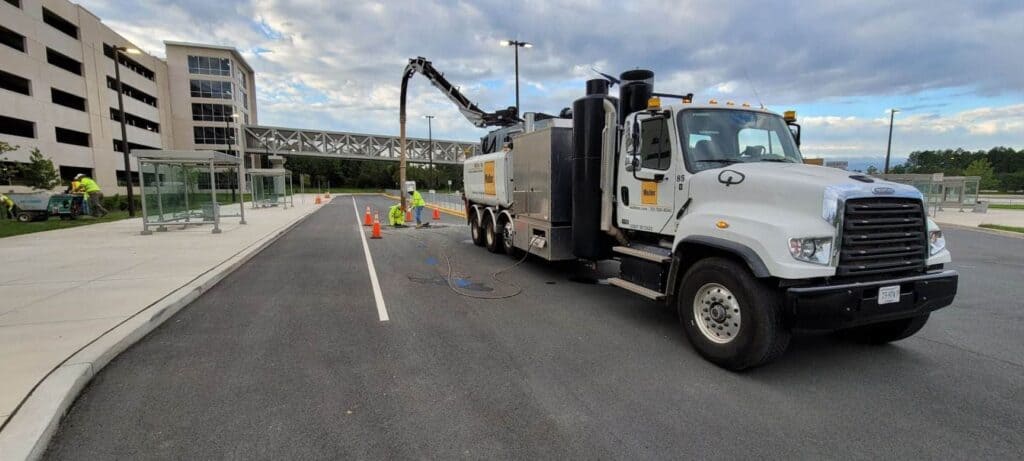
Hydro excavation is a non-destructive digging method that uses pressurized water and a powerful vacuum system to break up soil and safely transfer it into a debris tank. Unlike traditional excavation methods that rely on heavy machinery and manual digging, hydro excavation provides greater accuracy, efficiency, and safety.
This method has become the preferred solution for utility line locating, water line repairs, sewer projects, and foundation digging in both urban and suburban environments.
Hydro excavation services provided by Muller, Inc. offer several advantages over traditional digging methods, preparing your site quickly and efficiently for the next stage of development.
Benefits of Hydro Excavation
Let’s discuss some of the key advantages of hydro excavation for utilities and construction projects:
1. Greater Accuracy for Utility Lines
Traditional digging with backhoes and shovels often creates more disruption than necessary. According to the Common Ground Alliance’s 2024 DIRT Report, nearly 200,000 damage incidents were reported nationwide, with underground utilities struck almost every three minutes on average.
Hydro excavation allows contractors to dig with precision, making it ideal for jobs where accuracy is critical, such as exposing water lines, sewer pipes, and cables without damage.
2. Safer Excavation Method
Heavy equipment and manual excavation come with high safety risks.
OSHA identifies excavation as one of the most hazardous construction activities, requiring strict compliance with 29 CFR 1926 Subpart P. Hydro excavation’s non-mechanical, non-destructive process helps contractors stay in compliance with OSHA trenching standards by reducing collapse and utility-strike risks.
Hydro excavation reduces hazards because it uses only water and air. Equipment can also be staged away from the actual dig site, minimizing congestion and the risk of accidents around workers and pedestrians.
3. Greater Efficiency in Hydro Excavation Projects
By combining pressurized water with vacuum extraction, hydro excavation speeds up soil removal and debris handling. The dirt is transferred directly into a debris tank, eliminating time-consuming cleanup and allowing projects to stay on schedule.
4. Protects Underground Utilities
Hitting underground pipes or cables can cause costly damage and delays. Hydro excavation’s precision makes it the safest method for working around gas lines, sewer systems, and water mains. This accuracy prevents repairs, service outages, and liability risks.
5. Environmentally Friendly Excavation
Hydro excavation is minimally invasive and does not use chemicals. Because it only removes the soil needed, it reduces environmental disruption and helps ecosystems recover faster after a project. It’s a cleaner alternative for construction, landscaping, and utility work.
6. Cost-Effective Excavation Solution
With fewer risks, less backfilling, and faster project timelines, hydro excavation often costs less than traditional digging. Fewer workers are required, and the risk of expensive repairs to utilities or surrounding property is drastically reduced.
Research from the University of Alberta found that suction excavation methods (which include hydro excavation) produced life-cycle cost savings of up to 38% compared to hand-tool excavation and 14% compared to mechanical excavators for daylighting underground utilities.
7. Easier Waste Removal and Cleanup
Instead of leaving piles of dirt around the site, hydro excavation vacuums the soil into a debris tank. This improves jobsite cleanliness, keeps traffic flowing, and reduces restoration needs at the end of the project.
Hydro Excavation vs Traditional Excavation
| Factor | Hydro Excavation | Traditional Excavation |
| Accuracy | Highly precise, minimal disruption | Less precise, large areas disturbed |
| Safety | Safer, non-mechanical | Higher risk, cave-ins & accidents |
| Utility Protection | Best method for gas, telecom, water lines | Frequent utility strikes |
| Efficiency | Faster soil removal, less cleanup | Slower, requires backfilling |
| Environmental Impact | Minimal, targeted digging | Larger disturbance, heavy restoration |
| Cost | Lower overall, fewer repairs, less labor | Cheaper upfront, but costly risks |
Industries That Benefit from Hydro Excavation Services
So, what is hydro excavation used for? Hydro Excavation has particularly benefited the construction industry due to its ability to quickly and accurately complete the job.
When being used with larger projects that have limited space, particularly in big cities and other congested areas, using hydro excavation means that construction work does not require much space and does not have to cause too much disruption to traffic.
This method has become indispensable across a range of industries:
- Construction: Digging foundations and preparing land safely and precisely.
- Utilities: Installing or repairing underground pipes and cables without disruption.
- Plumbing: Accessing buried lines with accuracy.
- Landscaping: Creating planting areas or irrigation systems with minimal surface damage.
Hydro Excavation in Maryland, Virginia, and D.C.
At Muller, Inc., we’ve provided hydro excavation services for large-scale projects throughout Northern Virginia, Maryland, and Washington, D.C. Our expertise includes work for construction firms, municipalities, and utility companies.
Contact us today to request a hydro excavation quote.